






















































































- The International Kitchen
- Blog
- What Is EES and How Will It Affect My Trip to Europe?
What Is EES and How Will It Affect My Trip to Europe?
-

-

What Is EES?
Updated August 4, 2026.
You may be seeing news about something called EES, which is the European Union’s new Entry/Exit System. It launched on April 10th of this year, and it is designed to replace manual passport stamping by registering travelers’ names and biometric data (fingerprints and facial image).
The process is very new, but eventually with the EES, all non-EU nationals will have to register their fingerprints and have their picture taken on their first arrival in a participating EU country.
 Why did the EU change its entry and exit system?
EES is designed to facilitate the tracking of how long non-EU nationals are in the EU. US citizens, for instance, are allowed to stay in the EU without a visa for a maximum of 90 days out of every 180 day period. By accurately tracking your entry and exit, the EU can make sure you are not staying longer than you are allowed.
Does EES apply to all countries in Europe?
EES applies specifically to the 29 countries within the Schengen Zone, which includes most EU member states along with Iceland, Liechtenstein, Norway, and Switzerland. Ireland and Cyprus, although part of the EU, are not part of the Schengen Zone, so they do not use EES. The United Kingdom left the EU, so EES is not used there either.
This means, for instance, that if you have a flight connection in England, you will not do EES there, but you will be required to at your first arrival in a participating country.
If you are connecting via Amsterdam to Rome, since both the Netherlands and Italy have adopted EES, you would complete it in Amsterdam.
You can see more about to which travelers EES does not apply here:
https://travel-europe.europa.eu/ees/to-whom-does-ees-not-apply
What does the EES entail?
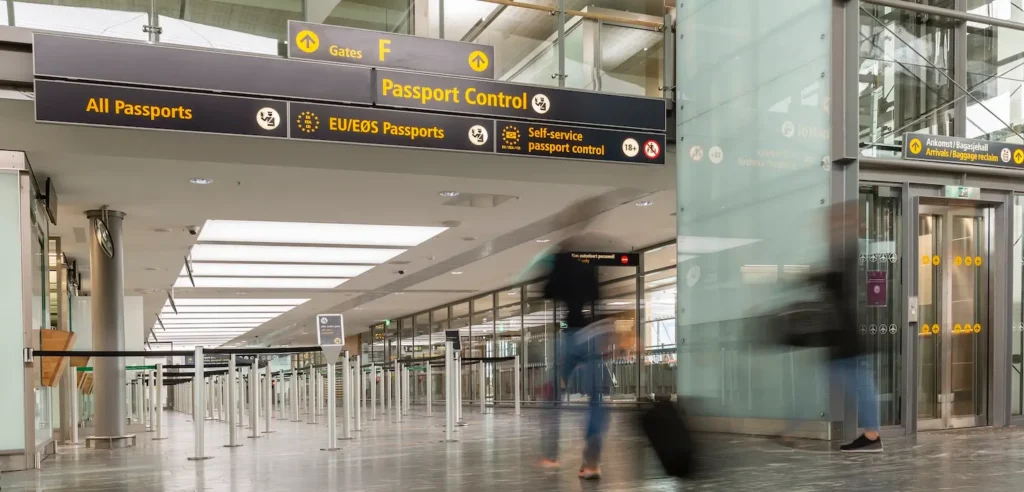
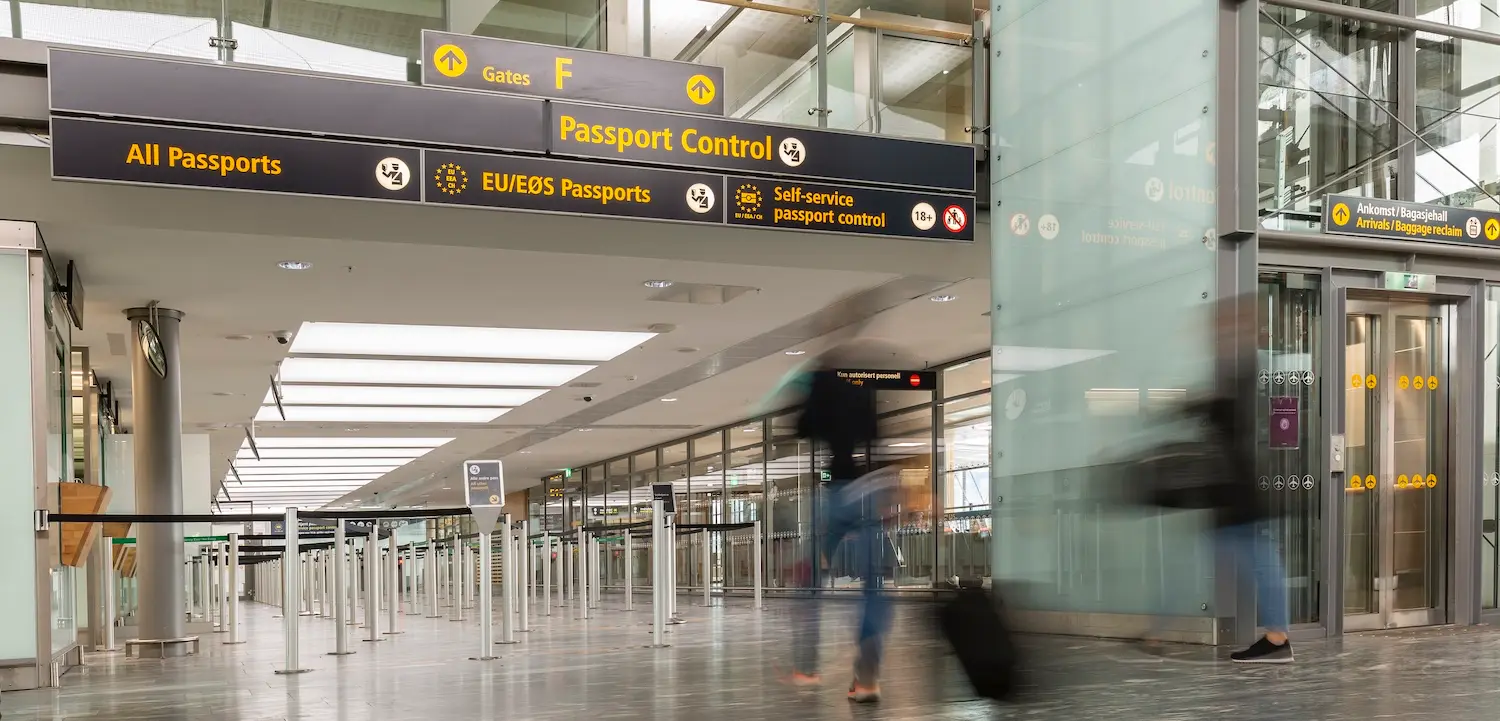
Eventually – and in theory already – all non-EU nationals will be required to use a kiosk on their first entry to a participating EES country to scan their passport, register their facial image and fingerprints, and answer a series of questions about their trip:
- What is the purpose of your visit?
- What is the duration of stay?
- Do you have proof of accommodation?
- Do you have proof of sufficient funds?
- Do you have a return ticket?
- Do you have medical insurance?
If you are asked to show documentation to support your answers (which is unlikely), your travel documents from The International Kitchen always list your accommodation; a credit card is sufficient to show proof of funds; and it is always best practice to have your insurance card with you while traveling (or a copy of your trip insurance medical coverage, if you have it).
If the kiosks aren’t working, or if there is some problem with scanning, you may be asked to see an agent to get entered manually. Currently, some airports appear to be using the new system sporadically or only in part, so you might not experience any of the new EES procedures!
How much does the EES cost?
Nothing! There is no fee involved.
Is EES the same as ETIAS?
No – ETIAS is the European Travel Information and Authorization System, a much-delayed online travel authorization for Europe that was just recently pushed back again and is now supposed to be deployed 2027.
 Can I do EES ahead of time?
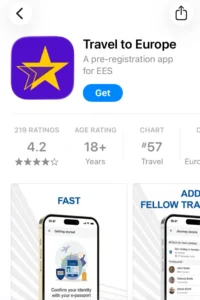
No, it must be done at arrival. There is an official “Travel to Europe” app which will allow you to partially pre-register biometric data and entry questionnaires for EES, but as of May 2026, only Sweden and Portugal are using it, and it does not eliminate the need to stop on arrival, as you still have to scan your fingerprints.
What does EES mean for me?
The new EES procedures may add time to your entry and exit process – or they may not. Does this mean you should leave extra time at the airport? If possible, the answer is probably yes, especially for connecting flights that are your first point of entry in the Schengen zone. Some airlines will allow connections as short as an hour, and that could lead to issues if you happen to arrive at a particularly busy time. That being said, we think it’s also possible to overreact and assume all airports will have long wait times, when that does not seem to be the case.
On my spring trip to France (late April/early May), at the Paris airport they were only doing the facial recognition, not fingerprints; when my scan didn’t work, they just waved me through to a traditional desk for passport control. I experienced no delays, either on arrival or departure.
 Some reports say that after a rough rollout, airports are being more sensitive to the length of the EES lines, and reverting to old-school passport control when necessary.
So far, none of our travelers have had more than an inconvenient line to get through, and most have noticed no delay over the standard passport control lines. Remember – even before EES, the length of these lines varied a lot by airport. If there are many overseas flights arriving at the same time, the passport control will get backed up no matter what system is used.
What can I do if I experience a problem or delay due to the ESS system?
If you find yourself in a long line on arrival, please let the local contact (listed on your trip documents) know that you may be delayed meeting your arrival transfer. On departure or during a connection, if your flight is imminent and you think you are at risk of missing it due to a long line, make sure the border control agents know when your flight departs – they may be able to move you to the front of the line. If you do miss a flight, you should speak to the desk of your airline as soon as possible to see what options you have.


Sign up to Receive Our Newsletter
As well as travel tips, promotions, and information on our best cooking vacations.



blog